Bespoke leadership programs

We take leadership teams places they will never forget.

Delivering powerful custom experiences in extraordinary settings.

Something happens to a team when you get them out of the building. The hierarchy loosens. People who never speak up start talking. The thing everyone has been polite about for a year finally gets said out loud. Twenty-five years in, we stopped being surprised by that and started designing for it.

The model

People. Programs. Places.

Every program we design starts at the center and works outward. Who your people need to become, the program built to get them there, and the place chosen to make it land.

01 / People

It starts with your people.

They come first: who they are, what they carry into the room, and what has to be different when they walk back out. Then the most important questions. Which behaviors need to shift? What change do you want still standing a year from now, and what is it worth to your business when it holds? Get that right and everything else has something to aim at.

That conversation is not a formality. It is where the whole thing gets its shape, and it is the reason no two programs we have run look anything alike.

02 / Programs

The program gets built around your team.

01

Find the story, and put them in it.

We look for a place with a unique story to tell, where real people faced something challenging and had to find their way through. That story becomes the way in. A locker room that has held Babe Ruth, Michael Jordan, and AC/DC. A beach where Navy SEALs train. A room built around a space shuttle that has been to space 33 times. We put your team inside the story and tie it back to what they are facing at work. The fit has to be honest. If it is decorative, your team will feel the seams within an hour.

02

Challenge them to build something that lasts.

We hand them a problem they cannot solve alone. What comes out of it belongs to them: the connections they formed, the people they now know differently, the commitments they said out loud, and the memory of the place they said them in. People protect what they create together.

03

Ingrain it in the work.

No binder gets packed in their suitcase. No deck gets forwarded around. The experience has to drive the action they take next. Before anyone leaves the room we line up what happened against your own priorities, with named owners and next steps. Then we keep going: structured practice, spaced reinforcement, and a clear read on whether the new behavior is showing up week by week. What your people practice once they are back at work is what actually changes.

Why teams call

You name the outcome. We design to it.

Leaders typically reach out for the same three things: to define who they are as a team, to communicate more openly and honestly, and to build trust. That is where it starts. What it turns into is more specific.

Alignment around a shared purpose

Getting a team to agree on where they are going, and what they will stop doing to get there.

Communication

Why the same message lands with half the room and bounces off the other half.

Trust

The thing that decides whether people tell you the truth early or late.

High-stakes strategic objectives

The one or two things that have to land this year, worked on by the people who have to land them.

Workflows and measurable outcomes

Where the work actually snags, and what changes once you unsnag it.

Cross-departmental collaboration

Making two groups who need each other stop operating like separate companies.

Leaders facing a transition

New scope, new structure, or a step up nobody has been properly prepared for.

Integrating new team members

Bringing people in properly, so a group that just changed shape works like one team.

Engagement and morale

What people are willing to give when they believe the work matters and the team has their back.

Decision-making

Pushing real authority down to the level where the information already lives.

Coaching

Certified executive coaching, which goes further once someone has been somewhere with their team.

Most programs braid three or four of these together, through working sessions, shared experiences outdoors, and guided reflection. In person or virtual, whichever your team needs to meet this moment.

3Typical days on site
5–200People, five to two hundred
100%Built from scratch

03 / Places

Our most popular settings, coast to coast.

Great teams run on shared memory. We make sure it is one they cannot forget, with your leadership goals at the center.

~100Programs delivered
25Years running

A top-five global pharmaceutical company has brought us back twelve times in the last three years alone, and many times before that across twenty-five years, for teams spanning oncology, immunology, neurology, gastroenterology, rheumatology, and patient services.

Tell us what your team is up against, and we will tailor the program and the place to get them through it.

Start a conversation

Use cases

Here is what it looks like in action.

A ballpark in September. A launch pad in April. Look behind the curtain at two of our most popular programs.

04 / Wrigley

Case 01 · Chicago

Wrigley Field · Two days

A marketing leadership team, in the oldest ballpark in the National League.

They had a new vision statement and a hard question underneath it. Whether a group carrying that much combined experience could still move like something new.
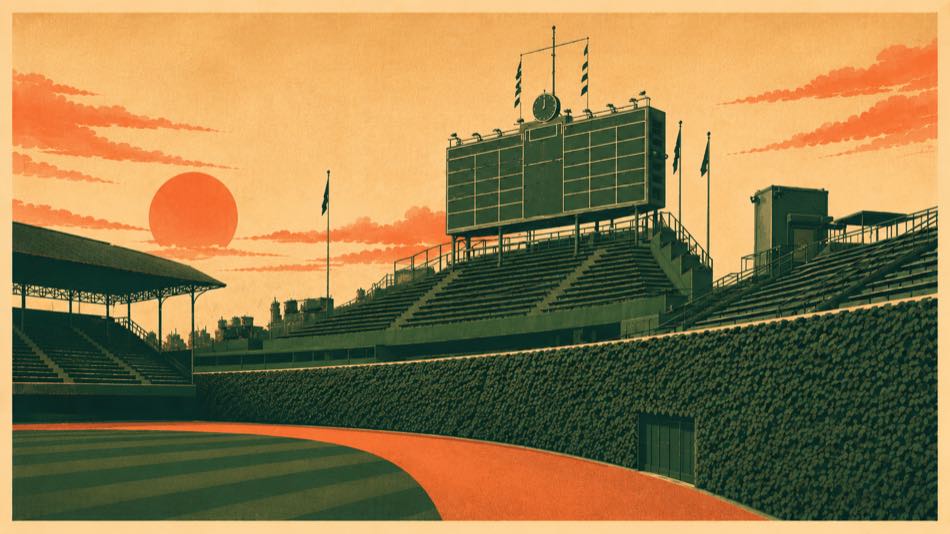
Illustrated postcard: an ivy-covered ballpark at dawn, hand-operated scoreboard, empty stands.
ChicagoIll.

Opened at dawn in the bleachers. Closed with the whole team standing in a single circle, and nobody sitting down.

PlaceWrigley Field, Chicago

DatesSept 16 to 17, 2025

Built onConnection, culture, competing to win

PostscriptThey asked us back the following spring, for four days

We opened in the bleachers before the park was awake. It took about four minutes and it told the room more about itself than two years of engagement surveys had.

Years of experience in that row of seatsYears
0

More than the 2016 roster that finally won. Not by much.

From there the day belonged to the ballpark. Joe Maddon ran that clubhouse on a handful of phrases his players could recite cold. By late afternoon this team had their own, in their own words, argued over and landed on together. They were still using them months later, which is the only test that counts.

Theo Epstein rebuilt that team by knowing exactly what each player brought and how the pieces fit together. We spent the back half of the afternoon on the same question, and people learned things about colleagues they had sat beside for a decade.

The tour was the part nobody expected to matter. They sat out with the bleacher bums, stood in the press box and the dugout, and finished in the visiting clubhouse that has housed Babe Ruth, Michael Jordan, and AC/DC. Every stop was doing something. None of it felt like work.

We closed the first day with something we have run dozens of times. It has never once gone the way it went that evening. Nobody sat down. They kept holding the floor with each other until the whole team was standing in a single circle, and we let it run.

Day two went at their actual work: their vision against the business unit mandate, and what empowerment has to look like on an ordinary Tuesday when nobody is watching.

They asked us back the following spring.

05 / Kennedy

Case 02 · Orlando

Kennedy Space Center · Three days

Same company, different team, standing next to a rocket built to go to the moon.

Apollo 13 is one of the few leadership stories almost everyone already knows the shape of. A crew a long way from home, an explosion, and a room of engineers told to solve it with only what was already on board.

Illustrated postcard: a Saturn V on the pad at night, gantry lit, clouds behind it.
OrlandoFla.

Three days under a rocket built to go to the moon. The Rocket Garden, the Saturn V overhead, and the one truth every leadership team recognizes and never says out loud.

PlaceKennedy Space Center, Orlando

DatesApril 3 to 8, 2025

Built onApollo 13, solve it with what is already aboard

PostscriptYou are not getting more resources

We built three days at the Kennedy Space Center on that constraint. The Rocket Garden. The Saturn V, all 363 feet of it, overhead while the team worked underneath.

The through line was the one every leadership team recognizes and almost none will say out loud. You are not getting more resources. You are going to solve this with the people and the parts you already have.

Three days later they had stopped asking for a bigger budget and started arguing about what they could do by Q3. That shift is the entire point, and it is much harder to manufacture in a hotel conference room.

They knew exactly what it cost them not to work together. Nobody had ever asked them to say it out loud.

That is two of about a hundred. Yours would be the next one.

Start a conversation

06 / Outcomes

What you and your team gain.

Four outcomes, whatever we build and wherever we build it.

Clarity of purpose.

Everyone can say what the team is for, in the same words.

Alignment on a shared vision.

Agreed out loud, by the people who have to walk it.

Results, faster.

A team pointed the same way covers ground that a scattered one cannot.

Leadership that turns intention into impact.

The capability to act on it, so the plan survives the first busy week.

People arrive pointing in different directions. They leave pointing in one.

07 / Who you get

Your team does the work. We create the space.

Creating that space is harder than it looks. It has to feel safe enough that people will risk something and open enough that they will say the real thing. We have built it a hundred times, indoors and out, for groups that had nothing in common except the team they arrived with. None of them went the same way, and that is where the judgment comes from.

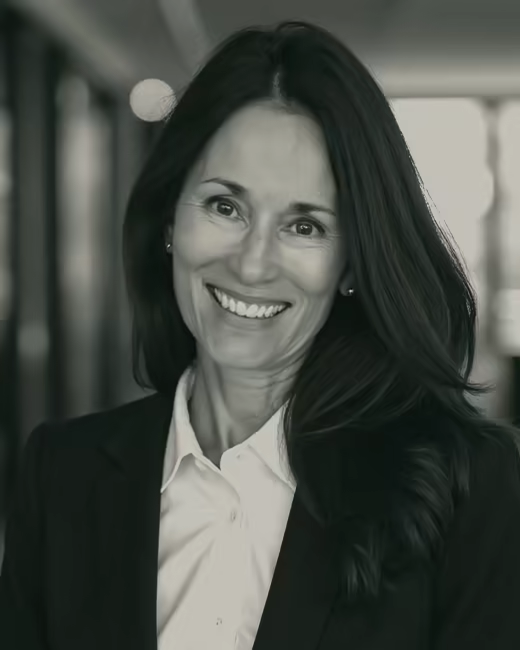
Patty Grace

Patty Grace

Principal

Patty brings more than three decades of experience partnering with leaders and teams in the pharmaceutical industry. After beginning her career in marketing and advertising, she found her passion in leadership and team development, helping individuals and organizations strengthen performance, navigate change, and achieve meaningful results. She founded Morrison Alley Consulting with a simple belief: learning and development should be as engaging and enjoyable as it is impactful.

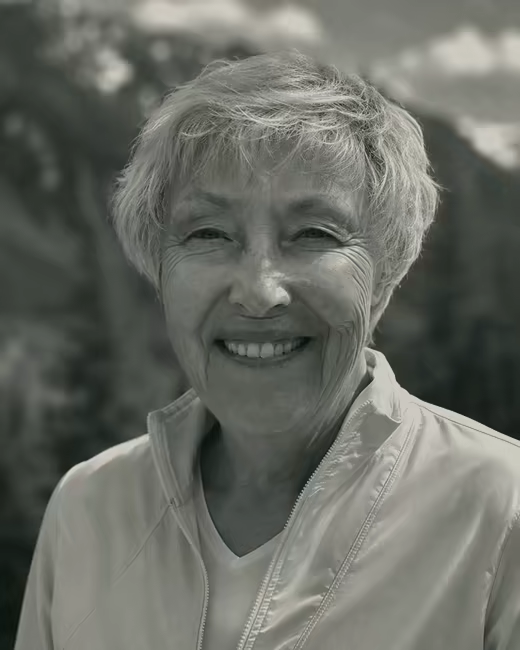
Cheryl Berrington

Cheryl Berrington

Principal

Cheryl has spent more than twenty years developing leaders, with hundreds of workshops and one-to-one coaching engagements behind her. She came up inside corporate HR, as employment manager for a Fortune 100 healthcare company and later a partner in an HR consulting firm. Her work centers on executive coaching, emotional intelligence, and conflict resolution. She studied psychology at the University of Illinois.

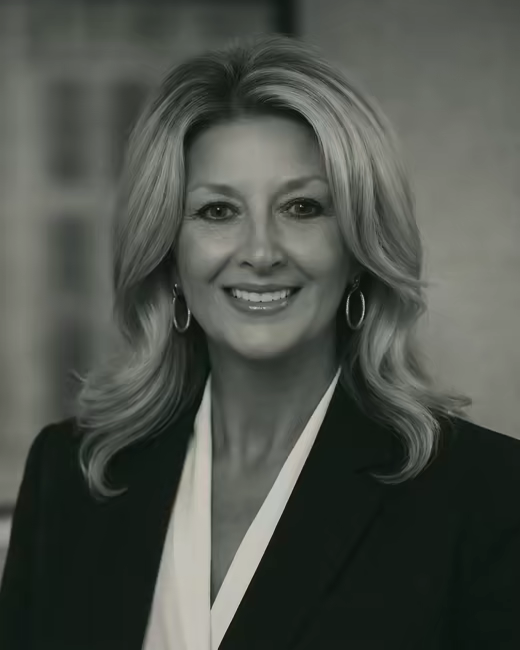
Dr. Noel Rettig

Dr. Noel Rettig

Principal

Noel has more than three decades partnering with leaders and their teams, facilitating the critical conversations they need to have about their business and their future. She challenges them to be crystal clear about who they are, to align behind the future they want to create, and to develop the leadership attributes that drive change.

Amanda Heldt

Amanda Heldt

Operations

Amanda has spent nearly two decades partnering with leaders and their teams to strengthen operations and create the structures that help organizations run smoothly. She focuses on making complexity manageable by aligning people, processes, and priorities so leaders can focus on what matters most. Her approach is steady, practical, and people-centered, grounded in the belief that strong operations enable leaders to do their best work.

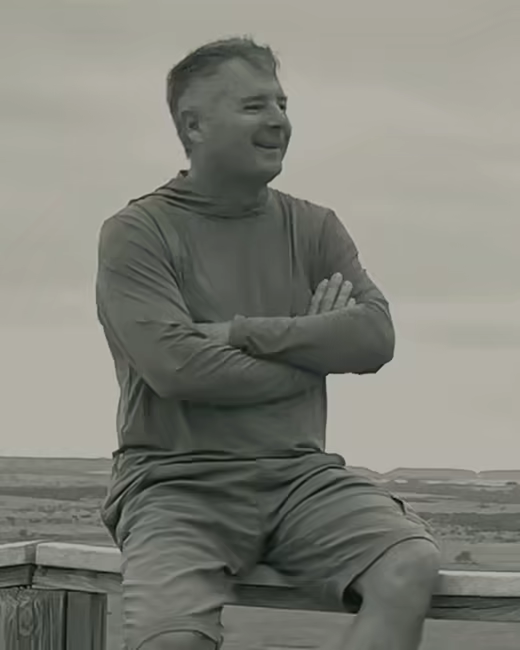
Glenn Slattery

Glenn Slattery

Experience Designer / Facilitator

Glenn is an experiential leadership facilitator and outdoor adventure professional with more than thirty years developing individuals and teams. A longtime Outward Bound leader and professional climbing and high-altitude guide, he has summited three of the world’s seven highest peaks, and spent twelve years in rescue and emergency medical response. He has designed and delivered leadership programs for organizations worldwide.

Jim Patterson

Jim Patterson

Experience Designer / Facilitator

Jim is a seasoned leadership consultant, facilitator, and executive coach with more than thirty-five years helping individuals, teams, and organizations reach their potential. He has led leadership development and organizational change initiatives for Fortune 100 global organizations, working with executives, senior leaders, and frontline teams. Known for his highly experiential approach, he brings deep expertise in The Leadership Challenge, Play to Win, DiSC, and Social Styles. He studied Psychology and Education at Appalachian State University.

Mike Martin

Mike Martin

Experience Designer / Facilitator

Mike has been designing and facilitating leadership programs since 1995. Two decades of that were spent in corporate learning and development, first standing up the training department at a national home improvement retailer, then as Chief Learning Officer at a global learning technology company. He teaches executive and emerging leadership at UC Davis, holds a master’s in instructional design, and has delivered more than fifty programs alongside Patty.

Start here

Let’s start with where you are going.

Bring us the change you are trying to make and we will help you find the way there. The first conversation is a working session, and you will leave with something useful either way.

Morrison Alley Leadership Boulder, Colorado Prototype · v2